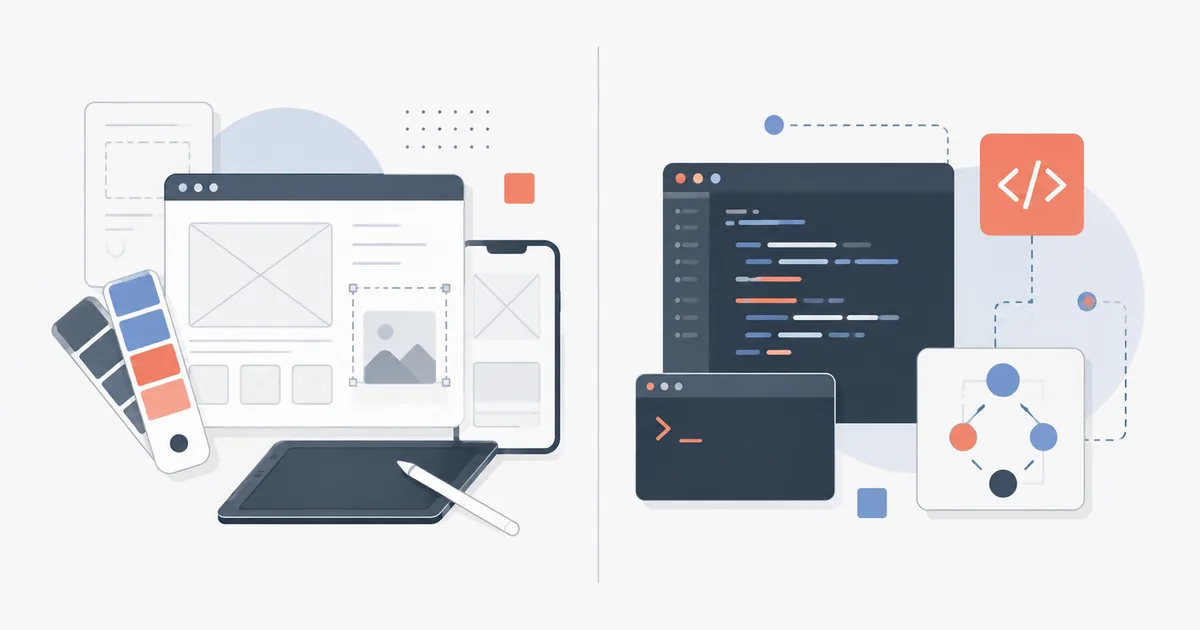
If you’re about to hire, the distinction matters financially. Hiring a brilliant developer to fix a design problem, or a talented designer to solve a performance problem, is how projects run over budget while nobody is at fault.
Quick comparison
| Web designer | Web developer | |
|---|---|---|
| Primary output | Wireframes, mockups, design system | Working, deployed website |
| Main question answered | Does this work for the user? | Does this work in the browser? |
| Core tools | Figma, Adobe XD, Sketch, Webflow | HTML, CSS, JavaScript, PHP, React, Git |
| Typical hourly rate (US, 2026) | $50–$150 | $60–$180 |
| Typical annual salary (US) | $60,000–$105,000 | $80,000–$160,000 |
| Deliverable format | Design files, prototypes, style guide | Code repository, live site |
| Cares most about | Hierarchy, usability, brand, conversion | Performance, security, functionality, maintainability |
| Hire first when | You lack a clear brand or site structure | You have designs ready to build |
What a web designer actually does
Design is far more than choosing colours. A competent web designer works through:
- Research and strategy. Understanding the audience, the competition, and the single action the site must drive. A designer who opens Figma before asking what the business goal is will produce something attractive and ineffective.
- Information architecture. Deciding what pages exist, how they’re grouped, and what appears in the navigation. This affects both usability and SEO, since site structure influences how search engines understand topical relationships.
- Wireframing. Low-fidelity layouts establishing hierarchy and content order before any visual styling. Cheap to change here, expensive to change later.
- Visual design: typography, colour system, spacing scale, imagery direction, component styling, and accessible contrast ratios.
- UX and conversion design. Form design, call-to-action placement, trust signals, error states, empty states, and the mobile experience.
- Design systems. Reusable components and documented rules so the site stays consistent as it grows.
Specialisations you’ll encounter: UI designer (visual interface), UX designer (research and flows), product designer (both, usually in-house), visual or brand designer (identity-led).
What a web developer actually does
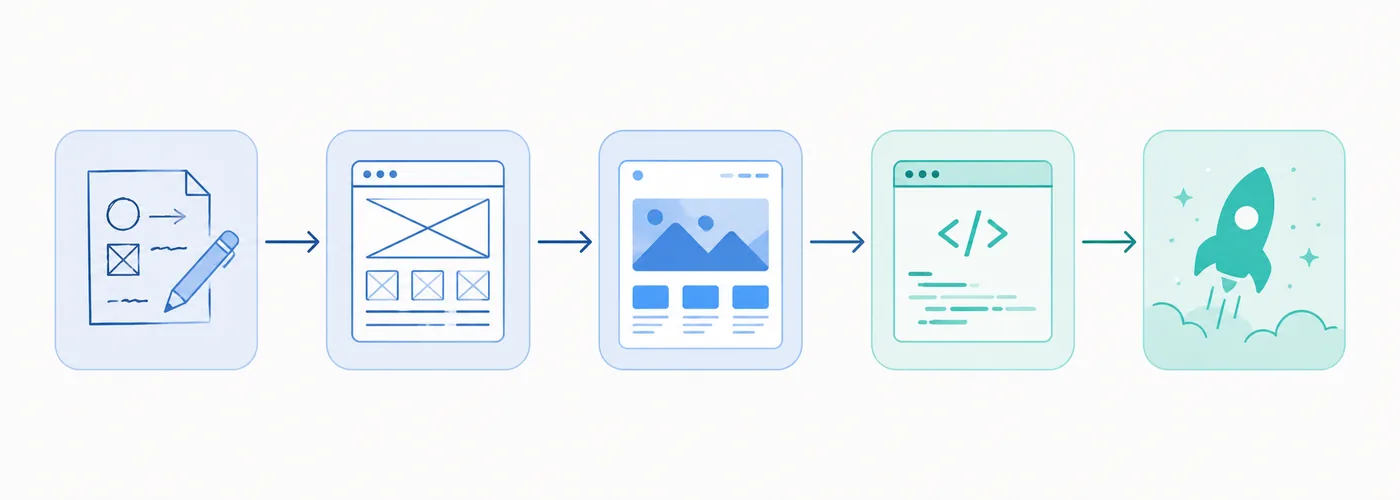
Development converts static designs into a functioning system.
Front-end development
The HTML, CSS and JavaScript that render the interface. Responsibilities include responsive behaviour across devices, animation and interaction, accessibility markup (semantic elements, ARIA, keyboard navigation), cross-browser compatibility, and front-end performance.
Back-end development
Server-side logic, databases, authentication, payment processing, APIs, email systems and admin functionality. Common stacks include PHP/Laravel, Node.js, Python/Django and Ruby on Rails.
Full-stack development
Both layers. Most freelance developers working on small business sites are full-stack by necessity.
The parts clients rarely see
Version control, staging environments, security hardening, form validation and spam prevention, caching and Core Web Vitals optimisation, SSL configuration, backups, error monitoring and deployment pipelines.
This is why development quotes look high relative to visible output. Roughly 40% of development time goes into work that is invisible until the day it fails.
Where the two roles overlap
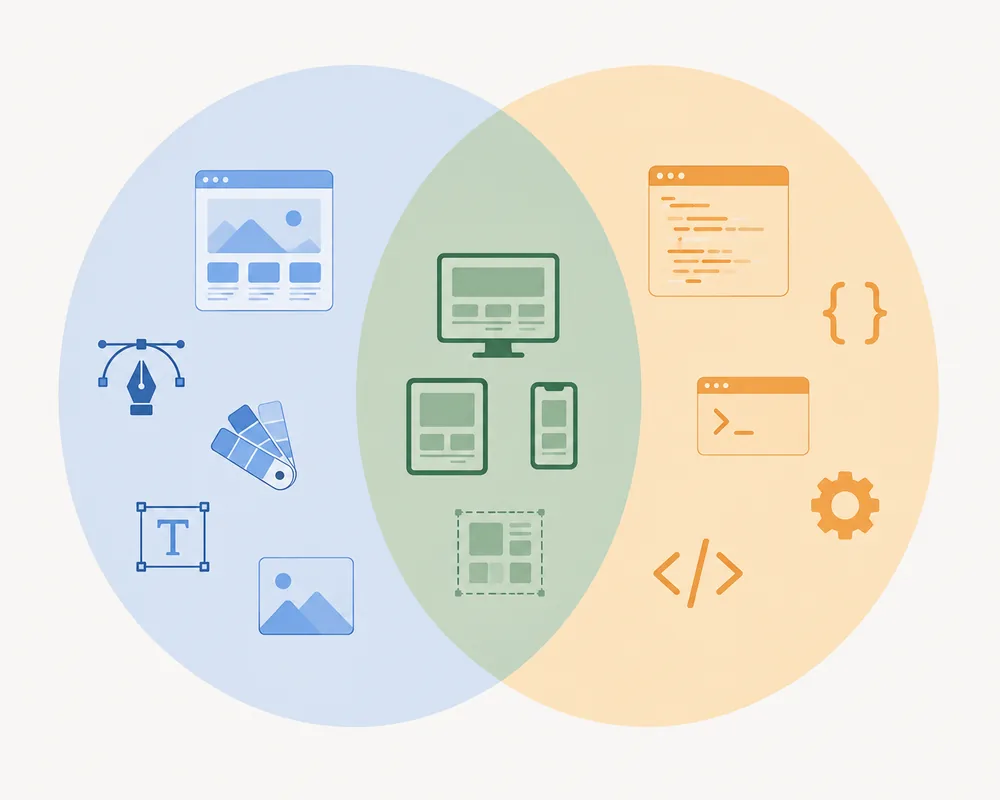
The boundary blurred years ago, and the overlap zone is now large:
- Responsive design. Both roles must understand how layouts behave across breakpoints.
- Accessibility. Designers ensure contrast and focus states, developers implement semantic markup.
- Performance. Designers influence it through image and font choices, developers through code and delivery.
- Webflow and visual development. A designer can now ship a production site without a developer for many marketing use cases.
- Design tokens and component libraries. A shared language across both roles.
Job titles reflect this. “Web designer” often means someone who designs and builds in WordPress or Webflow, while “front-end developer” increasingly implies strong visual judgment.
Which one should you hire?
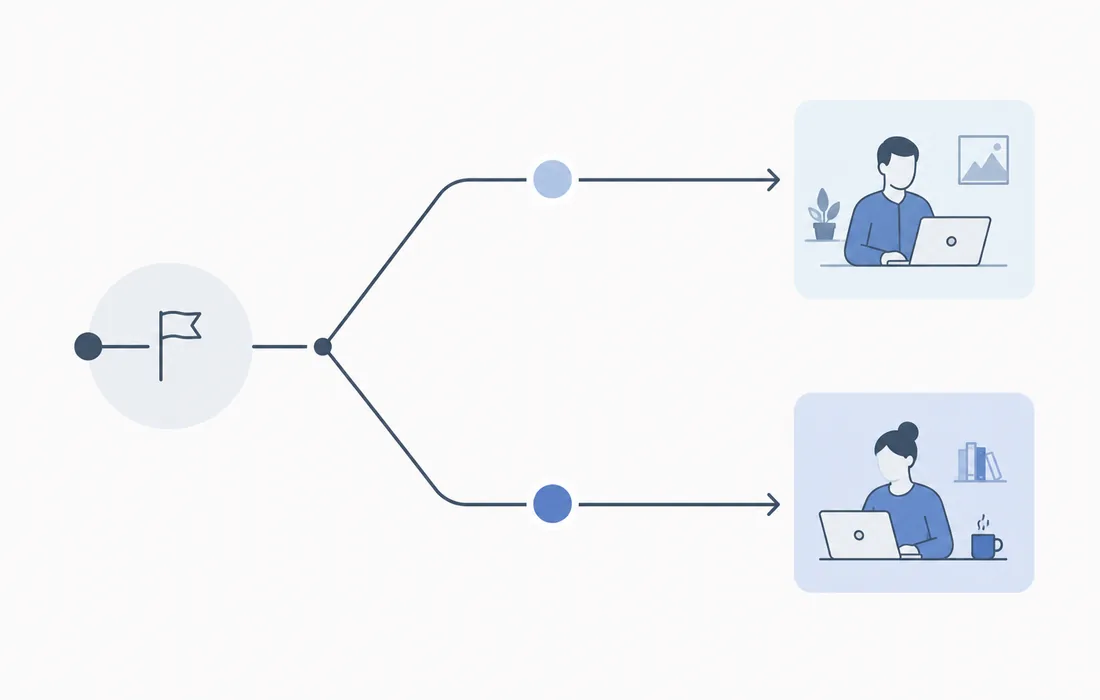
Hire a web designer first when
- You have no clear brand identity, site structure or messaging
- The current site looks dated or fails to convert traffic that’s already arriving
- You need a redesign strategy before writing any code
- Your problem is described as “it doesn’t feel professional” or “people don’t contact us”
Hire a web developer first when
- Designs already exist and need building
- The site is slow, broken, insecure or failing on mobile
- You need functionality: bookings, payments, integrations, custom features
- Your problem is described as “it doesn’t work” or “it’s too slow”
Hire both, or one team that does both, when
- You’re building from scratch, starting with brand and structure
- The website is a primary revenue channel
- Custom design and custom functionality are both required
- You lack the internal capacity to coordinate two contractors
One person can do both when
- The project is a standard 5–15 page business website
- Requirements are largely covered by an established platform
- The budget sits in the small-project range rather than enterprise
- You’ve checked a portfolio showing finished live sites, not just mockups
The vetting question that works: ask anyone describing themselves as a designer and developer to show you three live URLs they designed and built, then open them on a phone and run one through PageSpeed Insights. Design skill and development skill are both visible in about ninety seconds.
Cost comparison
| Engagement type | Designer | Developer |
|---|---|---|
| Hourly freelance | $50–$150 | $60–$180 |
| Small business project | $1,500–$8,000 | $2,500–$15,000 |
| Monthly retainer | $1,500–$6,000 | $2,000–$8,000 |
| Full-time salary | $60k–$105k | $80k–$160k |
These are US market figures for 2026 and they move a long way by region and seniority. Treat them as relative weighting rather than a quote. Developers command higher rates on average because the skill supply is tighter and poor work is more expensive to remediate. That said, a designer who lifts conversion on an existing site often returns more than any additional code would, which is worth weighing against your overall budget and project timeline.
Skills to look for when hiring
In a web designer
- A portfolio of live, launched sites, not just presentation visuals
- Demonstrated understanding of conversion, not only aesthetics
- Mobile-first thinking visible in their own work
- Accessibility awareness: contrast, focus states, text sizing
- The ability to explain why a layout decision was made
- Comfort working within brand constraints rather than fighting them
In a web developer
- Live sites that load in under 2.5 seconds
- Clean, semantic HTML. Inspect a page and look for meaningful elements
- Version control (Git) and a staging workflow
- Clear answers on security, backups and updates
- Willingness to hand over code and credentials without friction
- Documentation habits, so the next developer isn’t starting from zero
The same checks apply to an agency. If nobody will show you a live URL, a repository or a page speed score, you’re buying a promise, and that’s the same reason we audit a site before recommending a rebuild.
Frequently asked questions
What is the main difference between a web designer and a web developer?
A web designer plans how a website looks and how users move through it, producing wireframes, visual mockups and design systems. A web developer writes the code that makes the website function in a browser. Design is the blueprint; development is the build.
Can one person be both a web designer and a web developer?
Yes, and it is common on small business projects. Ask for a portfolio of live sites the person both designed and built. Be cautious of anyone claiming equal expertise in both on large or complex projects, since real depth in each discipline takes years.
Who earns more, a web designer or a web developer?
Web developers typically earn more. In the US market in 2026, developers average roughly $80,000 to $160,000 a year against $60,000 to $105,000 for designers, reflecting tighter skill supply and higher technical complexity. Rates outside the US vary widely.
Do I need a web designer if I use a template?
Not always. A well-chosen template with strong content can perform well. A designer adds value by adapting the template to your brand, restructuring content for conversion and resolving usability issues the template cannot anticipate.
Should I hire a designer or a developer first?
Hire a designer first if you are starting from scratch or lack a clear brand and site structure. Hire a developer first if designs already exist, or if the current site is broken, slow or missing required functionality.
Is a UX designer the same as a web designer?
No. UX designers focus on research, user flows and usability testing, often without producing final visuals. Web designers usually deliver both the structure and the finished visual design. On small projects one person covers both roles; on large products they are separate.
Do web designers need to know how to code?
Not strictly, but the strongest designers understand HTML and CSS well enough to design things that can be built efficiently. Designers who understand code constraints generate fewer costly revision rounds during development.
Conclusion
The practical question isn’t which role is better. It’s which problem you’re solving. If people arrive at your site and leave without acting, that’s usually a design problem. If they can’t arrive, can’t complete an action, or wait too long for pages to load, that’s usually a development problem.
Diagnose the problem first, then hire the specialist who owns it. Doing it in the other order is the most common and most expensive mistake in website projects.
If you’d rather not split the two, start with a free mockup. The same person who designs your three main pages is the one who builds them, so nothing gets lost at the handover.